Where the land meetsthe sea wind.Collefrisio’s terroir in Frisa
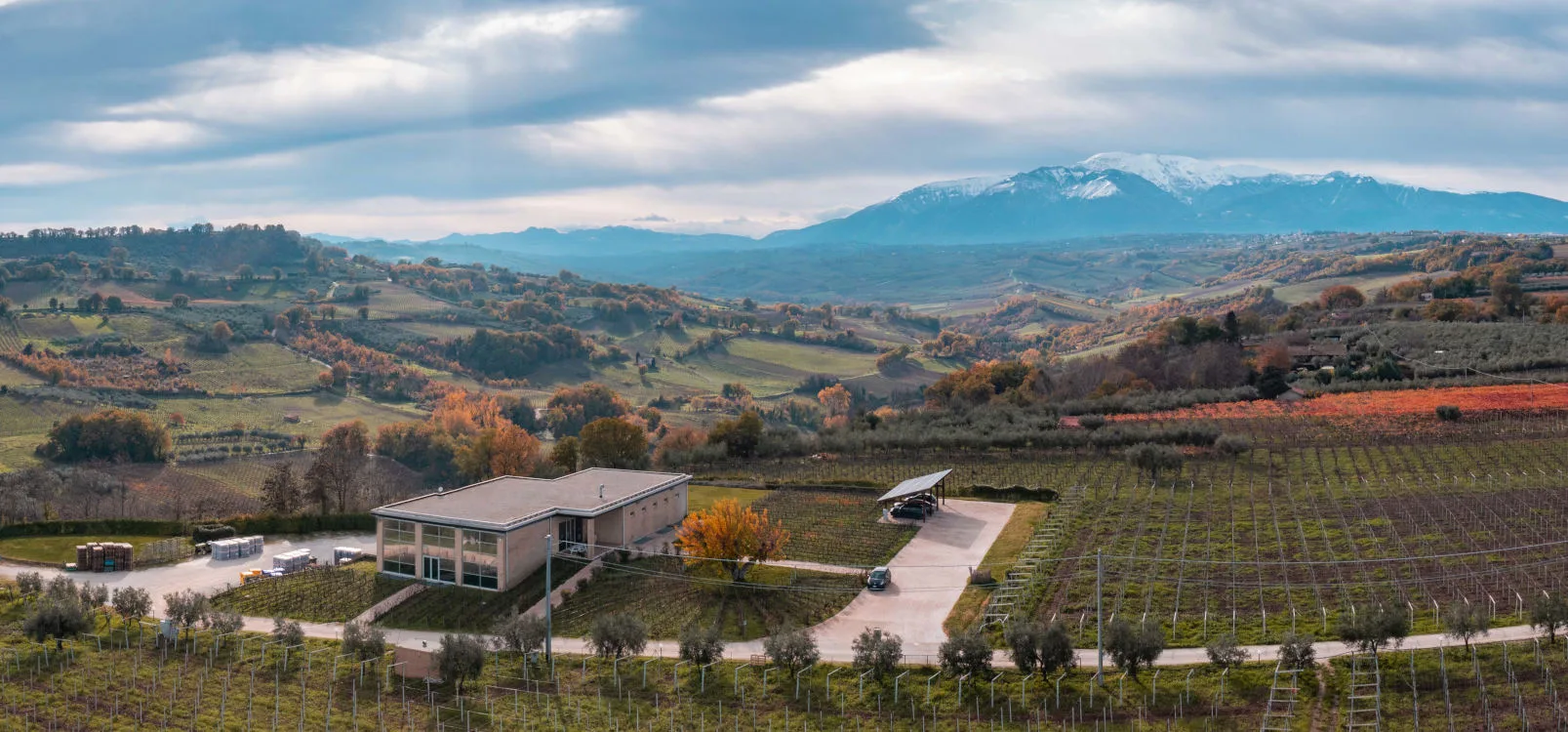
Frisa sits on a natural balcony over the Adriatic, halfway between two landscapes that almost nowhere else in the world lie half an hour’s drive apart.
The location
In the heart of Abruzzo
Frisa is a small village in the province of Chieti, set on hills that slope down toward the coast. A few kilometers from the sea, facing the Majella massif: two forces that meet in every bottle.
- Coordinates
- 42.28°N ·
14.37°E - From the sea
- ≈ 12 km
Municipality
Frisa (CH)
province of Chieti, Abruzzo
Altitude
180–320 m
hills open to the sea breeze
Soil
Clay and limestone
of Middle Pliocene origin
Climate
Mediterranean
mild, breezy, with wide temperature swings
Sea
≈ 12 km
the Adriatic that shapes the aromas
The landscape
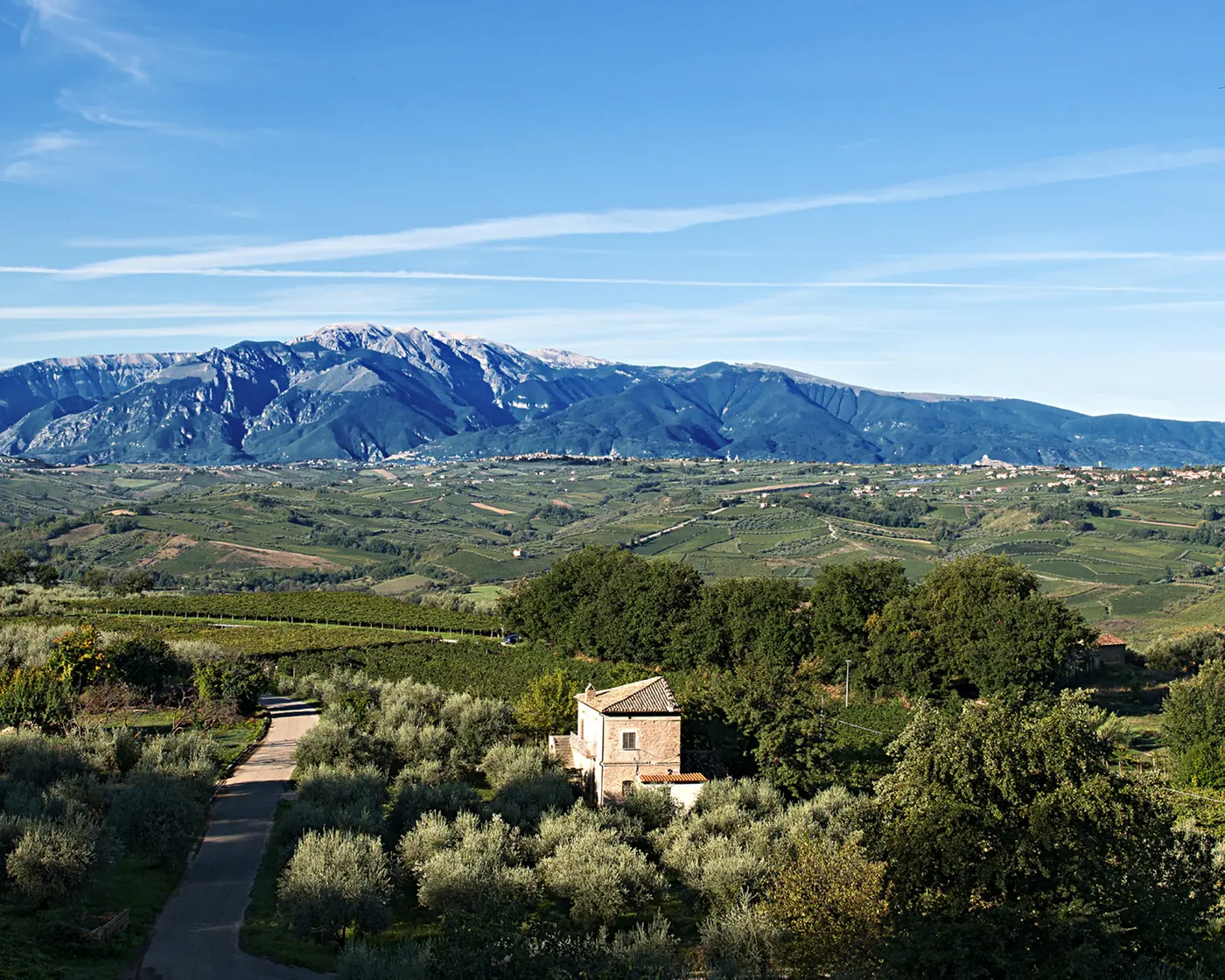
On one side the Majella, the second-highest peak in the Apennines: Monte Amaro reaches 2,793 meters, and from these hills you see the whole massif, not just a hint of it. On the other the Trabocchi Coast, where old wooden fishing machines stand suspended above the water, witnesses to a trade the sea still remembers.
The Abruzzo around us is no decorative detail: it is the greenest region in Europe, with three national parks, a regional park and thirty-eight oases and nature reserves. You don’t have to go far to find them: the Moro Valley, which runs right below our vineyards, is one of them.
The Moro River
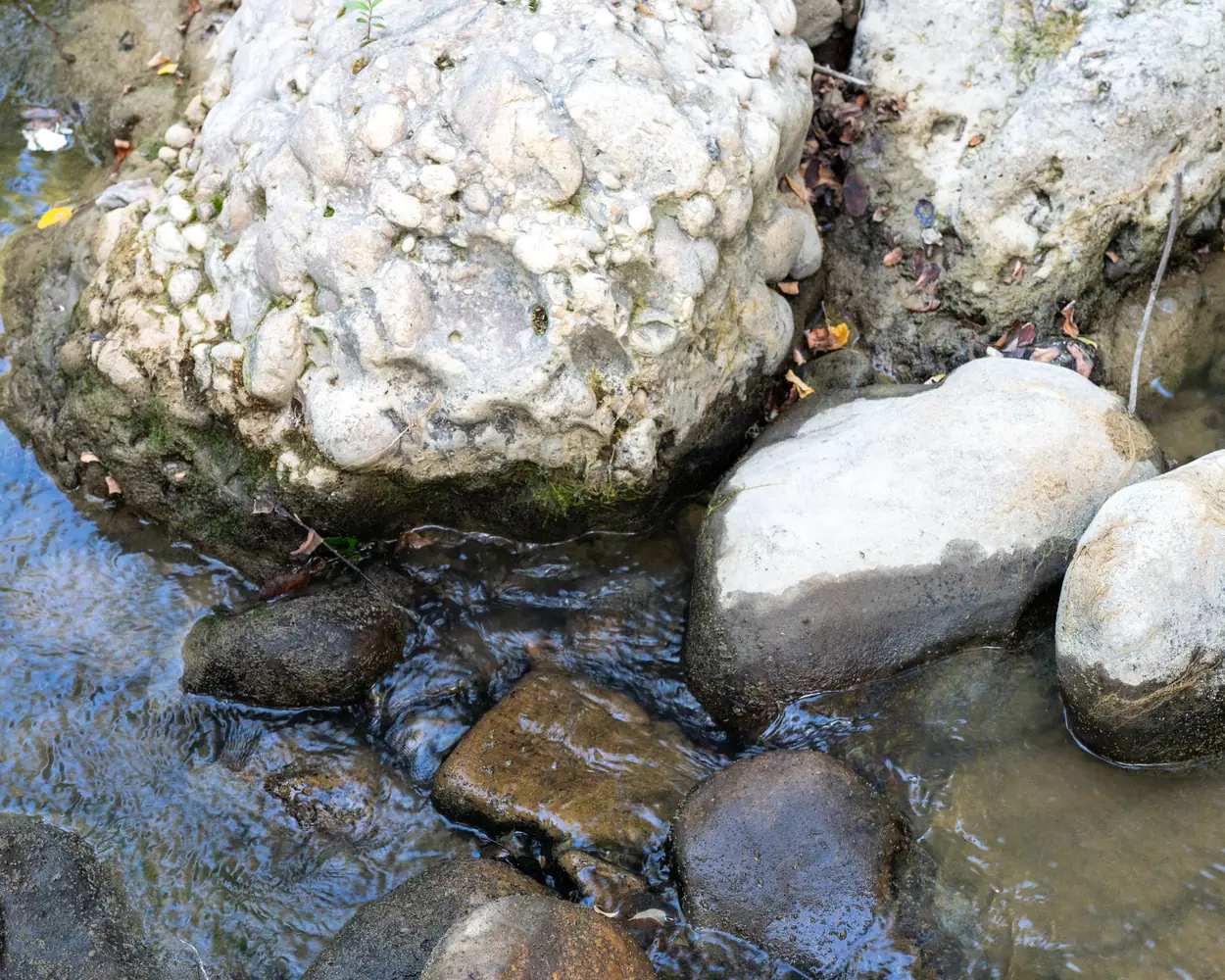
The Moro rises inland and runs down to the Adriatic, cutting through the valley that bears its name, right below our vineyards. It is a small, almost silent river, but over the centuries it has carved the rock and shaped the hills we farm today.
We often put it this way: water cutting into stone, slowly, without hurry, is the same image that guides the way we work the land. It is no accident that the first thing we show of Collefrisio, even before the wine, is exactly this: a glimpse of the Moro flowing.
Culture
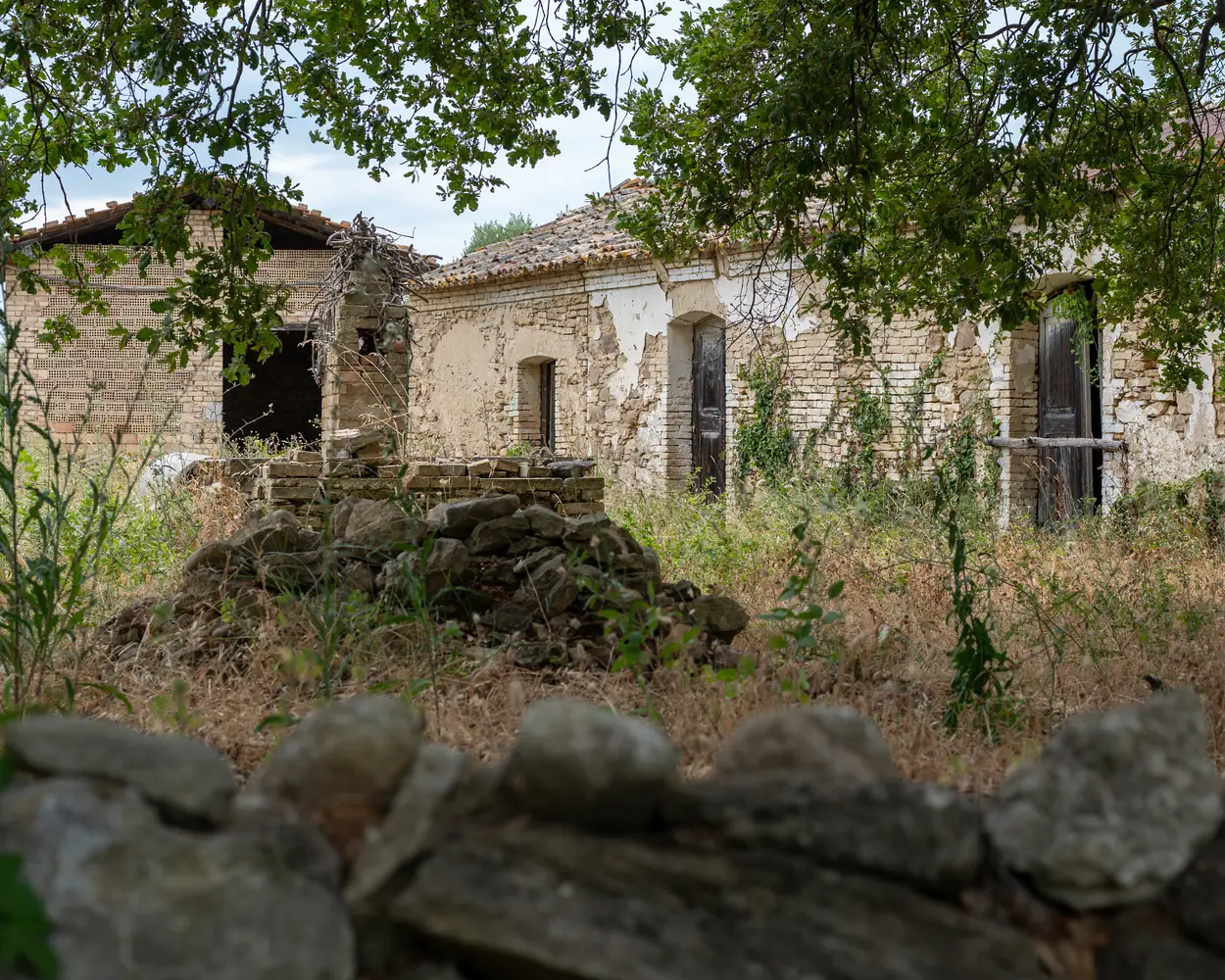
Among the hills of Frisa there are still traces of a rural architecture that time has not yet erased: stone farmhouses, dry-stone walls, ruins that marked the edges of the fields before the fields became vineyards. We don’t restore them to make a museum: they stay where they are, part of the landscape, silent witnesses to those who worked this land before us.
It is a culture handed down more through gestures than words: the way you prune, the way you read the sky before the harvest, the way you tell the story of a vintage through what you saw in the fields. Not everything we put in the bottle can be measured: part of it is memory.
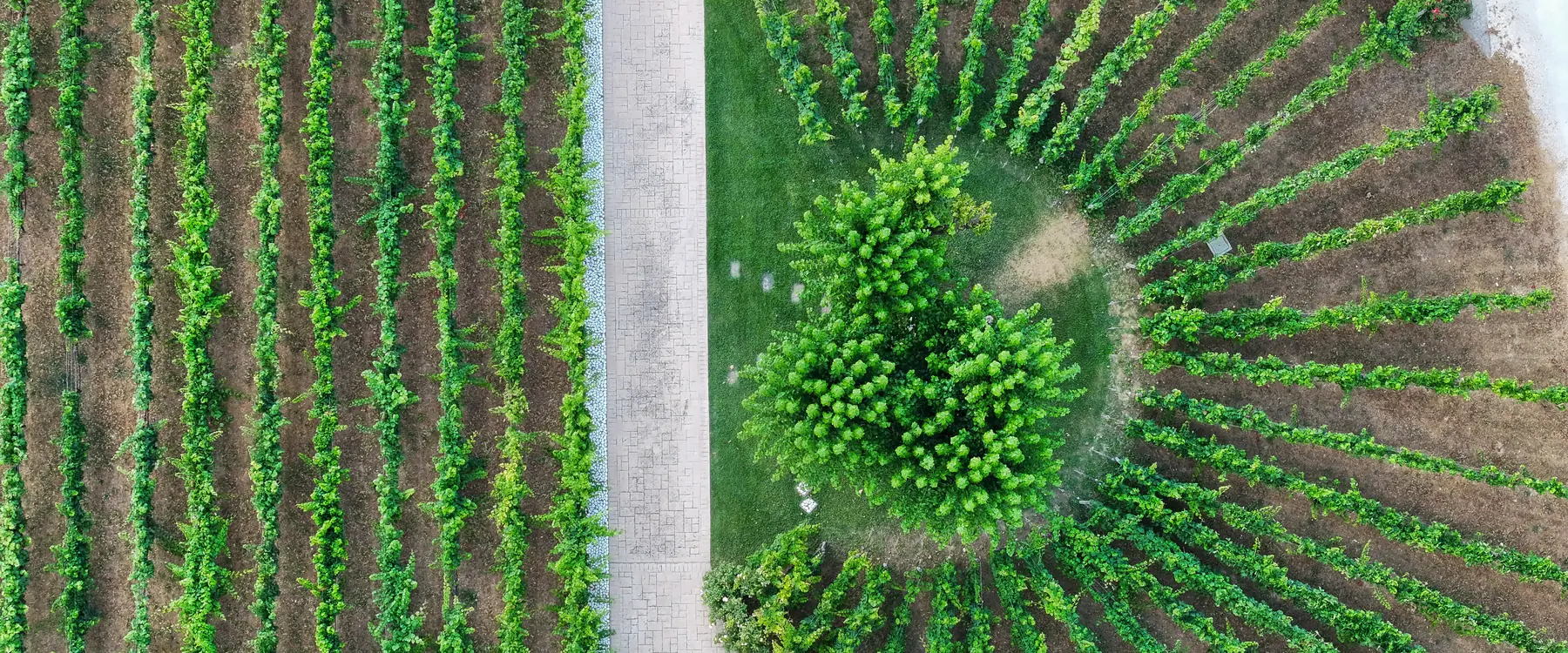
“Before the wine, there is the land. All we do is listen to it.”
The microclimate
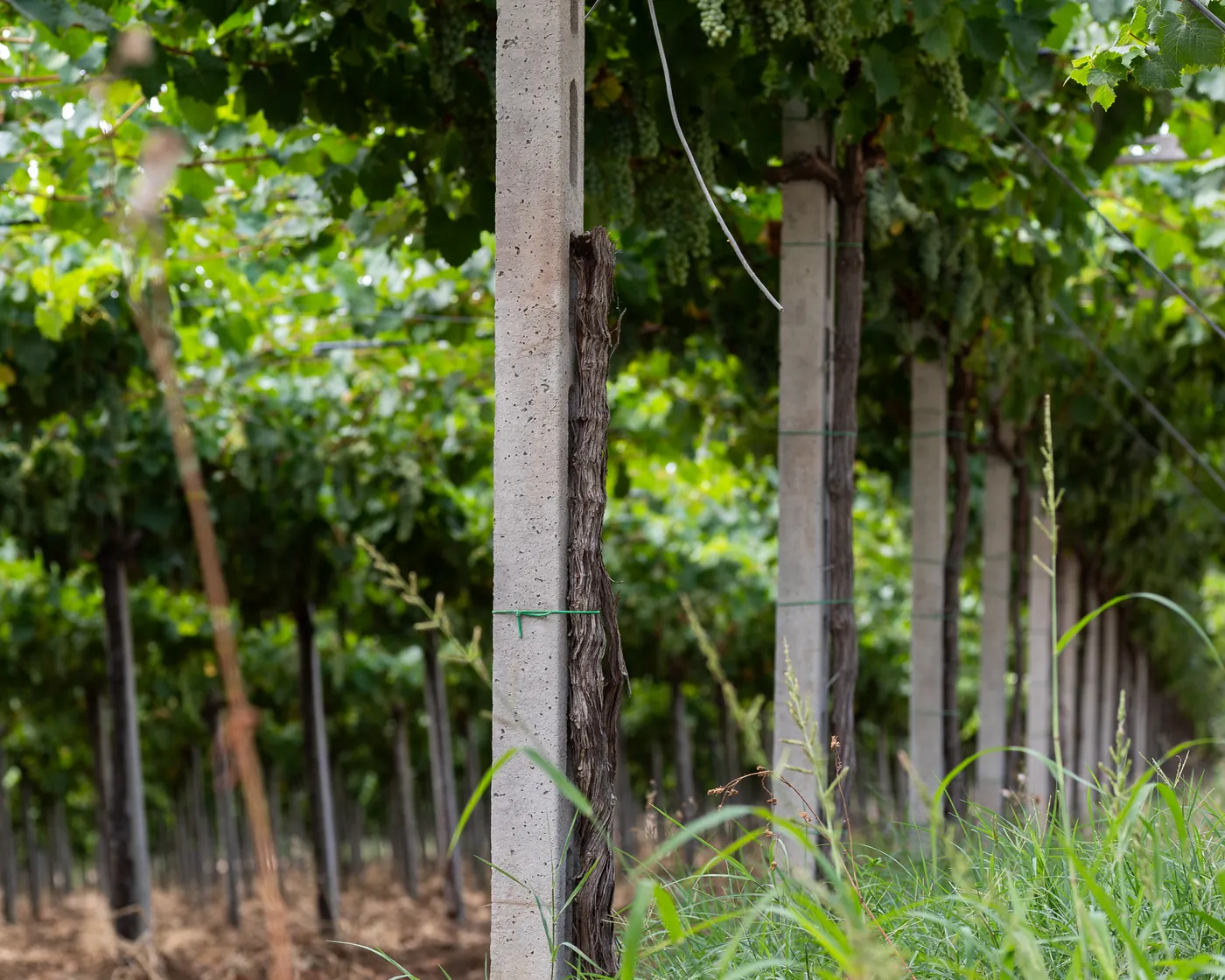
In Frisa the wind never blows from just one direction. By day it comes in from the sea, by night it comes down from the mountain: a reversal that repeats every twenty-four hours and brings the climate of four different seasons into a single day.
These temperature swings are what drive the aromas into the grapes: not a poetic notion, but the technical reason our wines have the character they do.
The coast
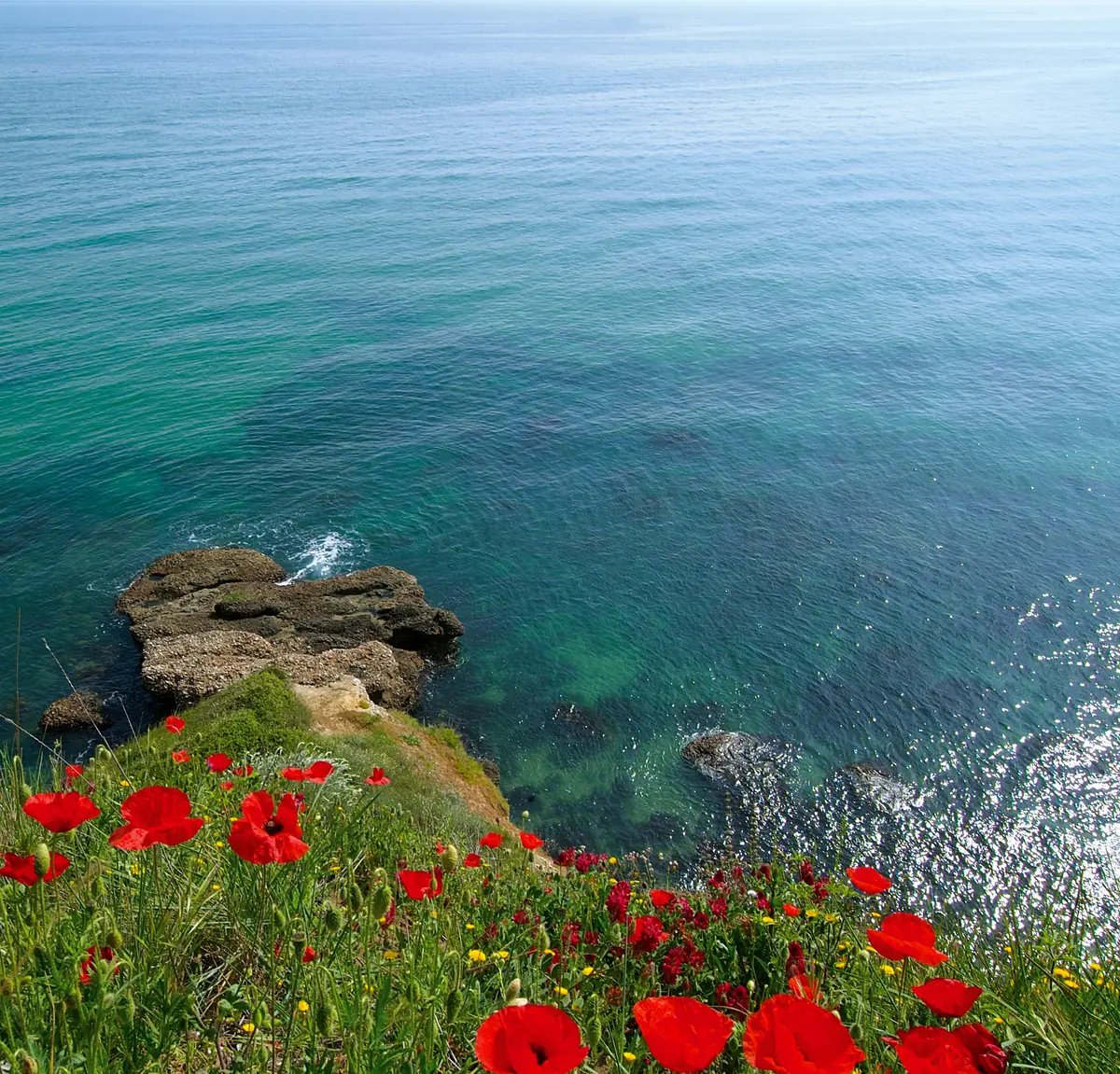
The Trabocchi Coast is crossed by the Via Verde, a 42-kilometer cycling and walking path that follows the sea, part of a larger project that will one day link Trieste to Santa Maria di Leuca.
It isn’t our property, but it is the landscape we see every day from the vineyards closest to the sea, and it matters as much as the vineyards themselves in defining who we are.
The grapes
The native grapes that make Abruzzo
Montepulciano
the red of Abruzzo
Pecorino
a white with tension
Trebbiano
the tradition
Cococciola
a white from around Chieti
Passerina
lively and sunny